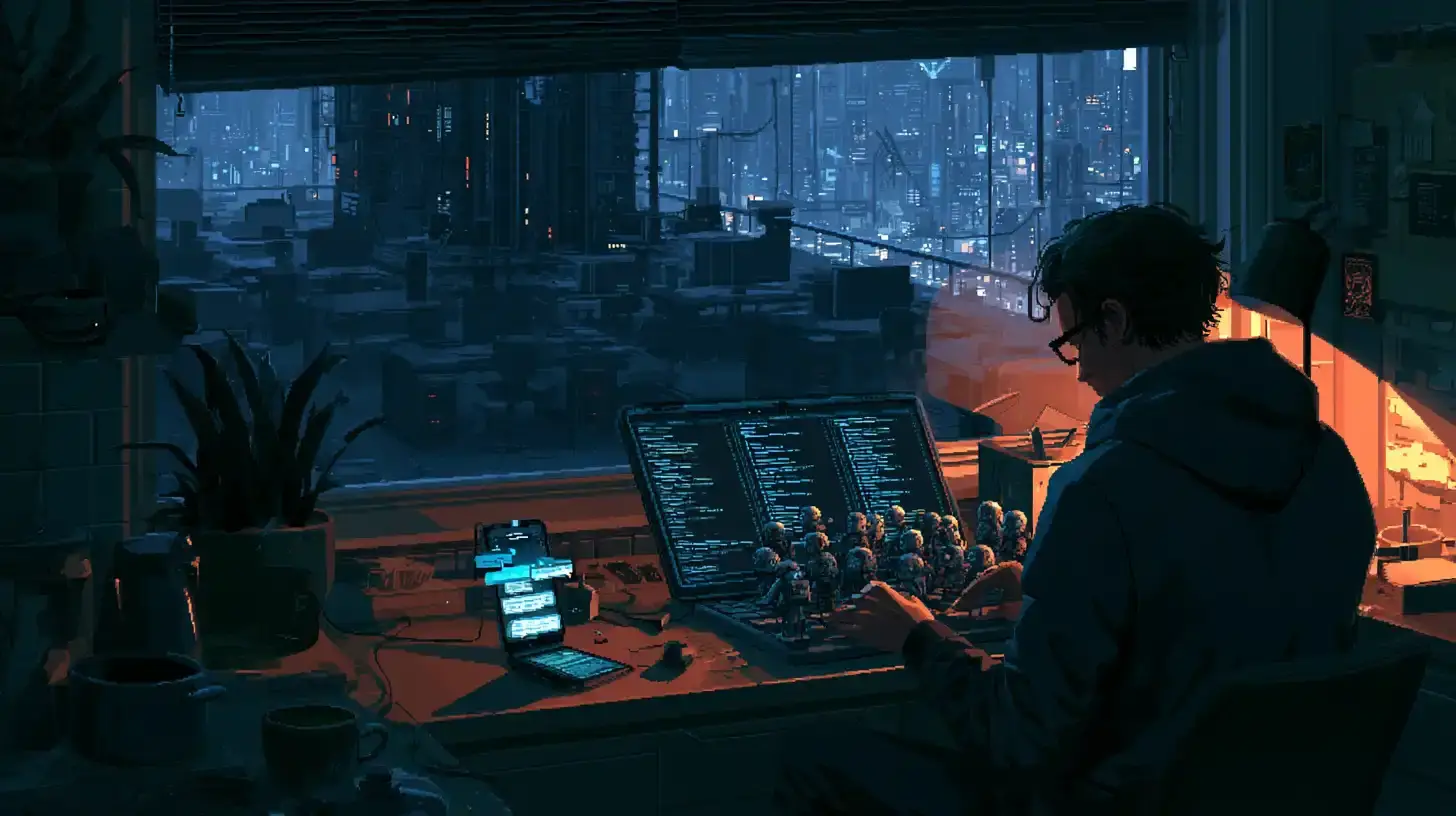
A company can’t run with zero humans. It can run with one.
The ABC ran a piece this week on zero-human companies. A Sydney founder had a Confluence replacement built in about ten days, and wants it maintained with no daily human input by March. A law professor wasn’t buying it:
— Jeannie Paterson, University of Melbourne, to the ABCIt’s a terrible sleight of hand.
Australian law needs human directors. Paterson’s point is that a compliant zero-human company is really a sole proprietor with a lot of automation.
That’s the version I can vouch for. I’m running it.
Not Zero. One.
There’s no team between me and the work. The loop looks like this:
- A message lands, on whatever channel the client already uses. They don’t learn my tools.
- An agent reads it and checks the live system. It comes back with a diagnosis and a plan, not a question.
- I decide what it means. Yes, no, or not like that.
- Agents build, review and ship. A second model reviews every change before it goes out.
Agents already watch the channel. Watching is the easy part. The real decision is what you let run on that cadence, and what you’d rather manage on purpose.
The thread is the backlog. Next to an agency with a dozen people, that’s close to zero. It isn’t zero.
The third step is the one that matters. Once, an agent wanted to change code to fix a customer’s problem. I said no. The bug was in what we’d told the customer, not in the code. No agent was going to find that in the chat.
Where the Human Stays
Even the zero-human founder keeps AI away from payments and data security. On agents changing the product, he told the ABC:
— Lambros Photios, to the ABCYou always want a human in the middle there to mediate.
Same here. The human jobs are the ones agents can’t own:
- Meaning. Clients rarely say exactly what they want. Someone who knows them has to.
- No. Agents rarely refuse work. Someone has to.
- Accountability. The business still needs someone to blame, and a director the law can name.
- Sending. The agents draft every reply. They never send one.
A forwarded customer email is text from a stranger, read by an agent with production access. Treat it as data, never as instructions. The client’s favourite channel is also the easiest way to attack your agents.
This is make it work, make it right, make it land with the team cut to one. The agents make it work. I make it right, and I land it with the client.
My mate Steve runs three21, an AI integration studio in Brisbane. Their line is “Weeks, not quarters.” Same shape: small, senior, and fast.
What’s Next
- Voice. A voice note becomes a brief, and a spoken summary goes back.
- Price the outcome. When the work takes minutes, hours stop meaning anything.
What I won’t automate: sending, and saying no.
Zero-human is a headline. One human is a business model.
Related Posts