On Monday, Microsoft offered about 60,000 people, a quarter of the company, a package to leave.
— Amy Coleman, Microsoft chief people officerThe Voluntary Exit Offer reflects an important part of how we’re evolving our approach to change: creating greater flexibility and, where possible, more ways for employees to shape their next chapter.
To be fair, it is a buyout, not a layoff. Nobody is forced out. But a spokesperson also said it “isn’t a sign” Microsoft needs fewer people, while headcount fell by 5,000 in a year and 4,800 more were cut in July (GeekWire).
The memo is polite. The mood is not.
The Mood
Every conversation I have with peers and the people I work with ends up in the same place. Nobody says it in a memo. Everybody feels it.
The surveys say the same:
- Two thirds are running on empty. 66% of developers report less motivation. 60% feel more cynical (State of Devs 2026).
- Half feel insecure. 48% have experienced job insecurity. 29% expect to change careers within five years, for reasons beyond their control.
- 44% call AI a threat to their job. And 72% say AI is now integral to their work (State of AI 2026).
That last pair is the crisis in one line. We depend on the tools every day, and we fear what they do to us.
The Week and the Button
A colleague told me something recently that I can’t shake.
They spent the better part of a week hand-crafting an important document. I produced the same document with an agent in what looked like no time. Mine was better in almost every way. They said so.
That is the dread, in one moment. And the sound bite writes itself: I vibed it.
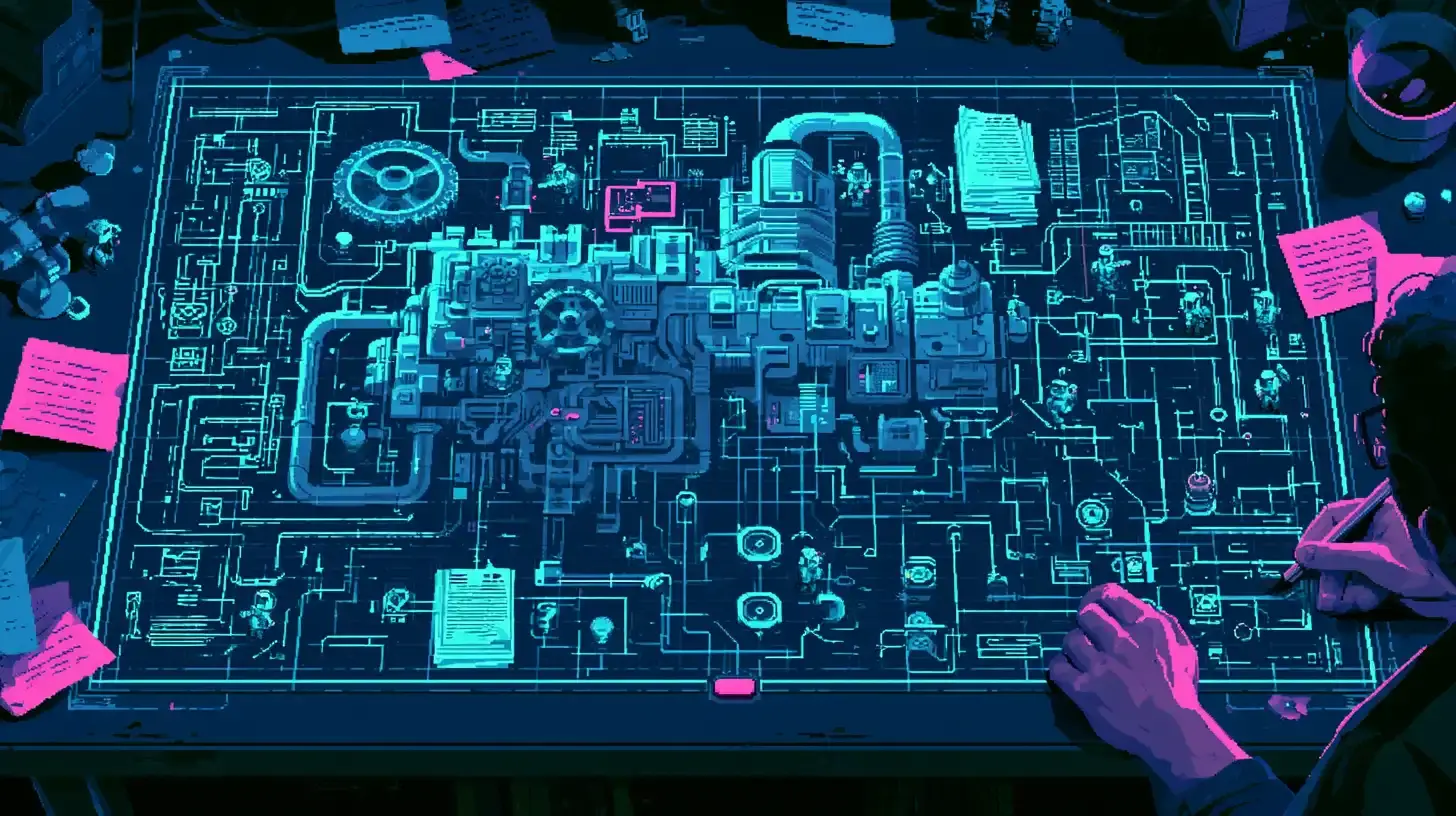
The real story is less fun to tell. I spent the better part of a year building the system behind the button. It is not one project. It runs across all of them:
- A document machine. Skills for proposals, solution designs, briefings, vendor comparisons and diagrams. They render web pages, plus PDF and Word copies for review.
- A planning machine. One planning repo holds thousands of documents across many workstreams. Years of old business documents converted to text. Every meeting transcript feeds back in.
- A prototype machine. Runnable spikes that turn a plan into something you can click.
- A product machine. A product I am building reads messy evidence in any language and turns it into structured assessments. It has a cloud build and an air-gapped desktop build that runs local models. The same system replatformed FameCake and built Pricogni’s matching engine.
- A checking machine. A second model reviews the work: almost 600 reviews in five weeks. A slop filter strips the AI tells.
- A place to work with it. SpecPilot is the front door: a workspace over the Git repo. I talk to the brain there, edit and preview what it writes, and colleagues review it with comments.
So yes, I can push a button. But the button is the last step, not the work.
What Changed
The game changed from crafting solutions to crafting systems that craft solutions.
The craft did not die. It moved up a level, from the document to the machine that writes it.
That is why it feels existential. The old skill was visible: a week of work, a document you could point at. The new skill hides inside the system. I built a factory where agents write most of the changes. It works, and almost nobody sees how.
The AI did not replace Microsoft’s 60,000. Its September-quarter capex is above $50 billion, up from $34.9 billion a year earlier, and free cash flow fell 23%. The buyout pays for data centres, not for agents that do the work. That is the AI scapegoat again, in a softer voice.
What We Must Do
- Build the system. Context, skills, review loops, proof. That is the craft now. A button with nothing behind it produces slop that looks right.
- Prove the output. The value is no longer in making the thing. It is in showing it is right: tests, a second model, a person who reads the evidence.
- Do the PR job. The button fools people in both directions. Developers think it replaces them. Everyone else thinks it replaces developers. Both see only the button.
That last one is the urgent one. Non-technical people watch an agent turn out a document or a prototype, and assume they can do the same. I have heard this before. In the old days it was “don’t you just drag a button onto the form?” The form builder made the button easy. It never made the software easy.
So show the machine behind the button. Not to guard the craft with mystery, but so people value the people who build it.
The Next Chapter
Last year I spent months without full-time work and sent more than 200 applications. I wrote about it. What carried me was the work itself, not the title or the company.
That gap is also when we founded a startup. It is doing well, and I was lucky. I probably could not have started it from inside a full-time job.
That still holds. The people who do well will build the machines, decide what they make, and prove the output is right.
The feeling is real, and polite memos don’t fix it. But the next chapter is not written by HR. We write it by showing what the work has become.
SpecPilot is where I talk to the brain and work on it with others: a planning workspace over a Git repo, with chat, docs and review in one place. It is invite-only right now, and opening to a wider audience soon.
Related Posts